- Dec 23, 2016
Augmented Meditation: HRV Training
- Dorian
- 0 comments
Besides exercise, a tool/practice I have been enthusiastic about is Heart Rate Variability (HRV) Training. It has helped me to be more relaxed in stressful situations and much more aware of my body in general.
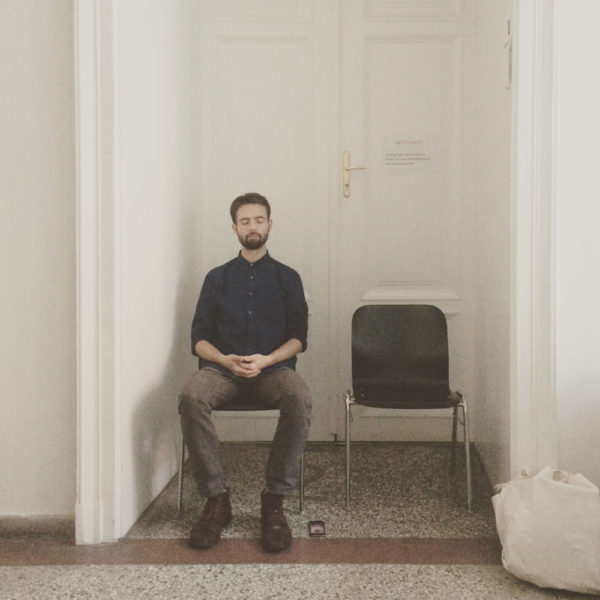
At the Technische Universität in Vienna, a few minutes before going on stage.
What is Heart Rate Variability?
HRV describes variations in the time between heartbeats. Your heart does not beat at a constant frequency like a metronome. HRV is typically measured in milliseconds and is calculated by taking the difference between the longest and shortest intervals between heartbeats over a specific period of time.
A higher HRV indicates that the heart can adapt to changing demands, which is generally considered a sign of good physical and mental health. On the other hand, a lower HRV indicates that the heart is less able to adapt and may be a sign of stress or poor health.
HRV training has been used by Soviet Union sports scientists since the 70s. Hospitals use it to treat patients with cardiac diseases, and psychologists use it to treat depression, anxiety, and ADD/ADHD. Over the past decade, HRV has spread across many fields and is gaining popularity as a measure of overall health.
How to Control Your Nervous System
Some of the world’s most effective performers use HRV as an integral part of their training. This includes Olympic athletes who are meticulous about investing their resources only in tools that are effective. I am not an athlete, but what makes it so valuable to me is the instant visual feedback on what is happening in my body.
Here is a screenshot from a recent training session.
I started the session feeling quite stressed and breathing poorly. By the end, after less than ten minutes, I felt relaxed and centered.
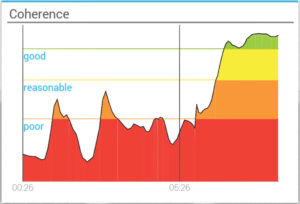
Screenshot showing increased HRV coherence during a 10-minute session.
The Effects of Stress on the Body
I am usually uncomfortable in larger groups of people – I get sweaty armpits and generally feel tense. In past stressful periods of my life, my quality of sleep is terrible and my jaw and upper back got extremely tense.
Over the past few years, I have learned to be much more attuned to the level of stress my body is experiencing and to have some control over how I feel. I want to become less reactive and better able to choose how I respond to pressure. I use HRV training with guided breathing to become present with what is and as a tool for dissolving tension.
If I’m tense and anxious, I don’t make good decisions. The better I feel, the better my work as an artist and teacher.
How does HRV Training work?
To change my mental state, I change my physiology. The most direct way to affect my body is through breathing, so my HRV training sessions revolve around breathing practice. It’s been remarkable how immediate the effects are. Biofeedback makes these changes visible, in real time, on the screen of my phone.
HRV training requires a smartphone, an app, and a precise instrument to measure your heart rate. There are generally three options for taking measurements:
A chest strap
An optical sensor in the form of an ear clip or finger sensor
A smartphone camera
Historically, chest straps have been least comfortable but most accurate. Smartphone cameras have been most comfortable but least accurate. Ear clips or finger sensors fall somewhere between. I have been using a Bluetooth ear clip from Kyto Fitness and recently the H10 chest strap from Polar.
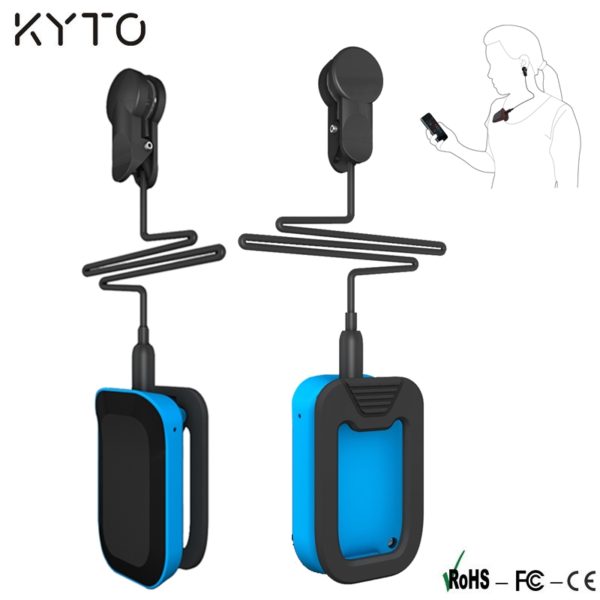
The Kyto ear clip sensor.
HRV Apps and Sensors
I’ve tried 15+ apps to find the one I like best. Here is what I’ve learned:
Free Apps
There are many free apps that measure simple heart rate (HR). What we need is something that goes a step further and measures heart rate variability (HRV).
Free App + $25 Ear Clip
This is a great starter kit: Kyto Bluetooth Ear Clip + EliteHRV app. This sensor has been compatible with all the apps I’ve tested, and the app is solid.
$5 App + Built-In Smartphone Camera
If you want to get started without an external sensor, the app with the highest value for the lowest price is HeartRate+. The interface is not as attractive as others, but HeartRate+ allows you to customize the breathing pattern, which is important.
No smartphone?
You can practice breathing without visual feedback. Just by listening to your body. Try to maintain the same breathing speed for a few breath cycles. Most people relax optimally at around 6 breaths per minute. Give this a go right now: Breath in through your nose for 4 seconds, pause briefly, breathe out through your mouth for 6 seconds, pause briefly. Continue for around ten rounds and notice the change in how tense or relaxed you are.
By the way, have you ever been told to “take a deep breath and relax”? What I’ve learned from HRV research is that this is bad advice. If you want to calm yourself it is much more effective to focus on maintaining the same speed of breathing rather than breathing deeply.
I invite you to pick one of the methods above and give it a try!
Further Resources
If you want to get deeper into breathwork, check out the Wim Hof Method or traditional Pranayama (breathing yoga). And here is an interview with Dr. Leah Lagos describing her 10-week guided breathing course.